The conquest of Constantinople was not a single dramatic moment isolated from everything before it. It was the final stage of a prolonged siege shaped by geography, technology, leadership, exhaustion and the extraordinary defenses of the city.
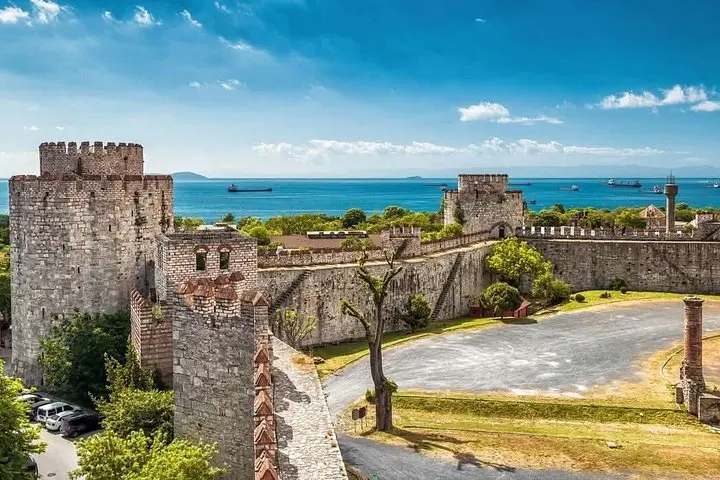
Understanding 1453 becomes far more powerful when the story is followed along the surviving land walls, where the scale of the challenge can still be seen.
A capital under pressure
By the fifteenth century, Constantinople remained symbolically immense but was no longer the vast imperial centre of earlier centuries. Its defenders relied on the strength of the walls, maritime barriers and a determined but limited force.
Mehmed II and the Ottoman strategy
Sultan Mehmed II prepared carefully for the campaign. Ottoman forces combined sustained pressure on the land defenses with naval operations and artillery. The siege demonstrated both new military technology and the continued importance of older defensive engineering.
The walls that had resisted centuries
The Theodosian system was not one wall but a sequence of obstacles. Attackers faced the moat, outer defenses, towers and the massive inner wall. Damage could be repaired at night, while defenders moved urgently between threatened sections.
The final assault
After weeks of pressure, the decisive assault took place in the early hours of 29 May. The fighting involved repeated attacks, heavy losses and intense struggle around the western defenses. By morning, Ottoman forces had entered the city.
From Constantinople to Ottoman Istanbul
The conquest ended the Byzantine Empire, but it did not erase the city’s earlier history. Mehmed II made Constantinople an Ottoman capital and began rebuilding its population, institutions and urban life. Byzantine structures were reused, transformed or preserved as the city entered another imperial age.
How to explore the story today
A thoughtful private route can connect selected sections of the land walls with gates, viewpoints, Chora and other surviving sites. The exact sequence should follow current access conditions and avoid promising entry to areas affected by restoration or closure.
For travelers who want more than a date
- See how the defenses worked in physical space
- Understand the strategies and limits of both sides
- Connect 1453 with the centuries before and after it
- Discuss competing historical perspectives with a licensed guide
Walk the landscape of 1453.
Follow the walls and places that turn one of history’s most famous dates into a clear, human and geographical story.
Explore the related private tour →