When travelers think of Byzantine Constantinople, Hagia Sophia naturally dominates the imagination. Its scale, engineering and long history deserve that attention. Yet the city once extended far beyond today’s Sultanahmet sightseeing circuit.
To understand Constantinople more deeply, it helps to connect its ceremonial centre with the defenses, neighborhoods, churches, palaces and water systems that allowed the imperial capital to survive.
The land walls: where geography became defense
The Theodosian land walls formed one of history’s most formidable defensive systems. Their moat, outer defenses, towers and inner wall protected the vulnerable western approach to Constantinople for centuries.
Walking selected sections with historical context helps visitors understand why the city resisted so many sieges and why the events of 1453 required extraordinary preparation.
Chora: a visual world of late Byzantium
Chora’s mosaics and frescoes reward careful explanation. The images were arranged as connected narratives rather than isolated decoration. Architecture, scripture, patronage and theology meet in a remarkably intimate space.
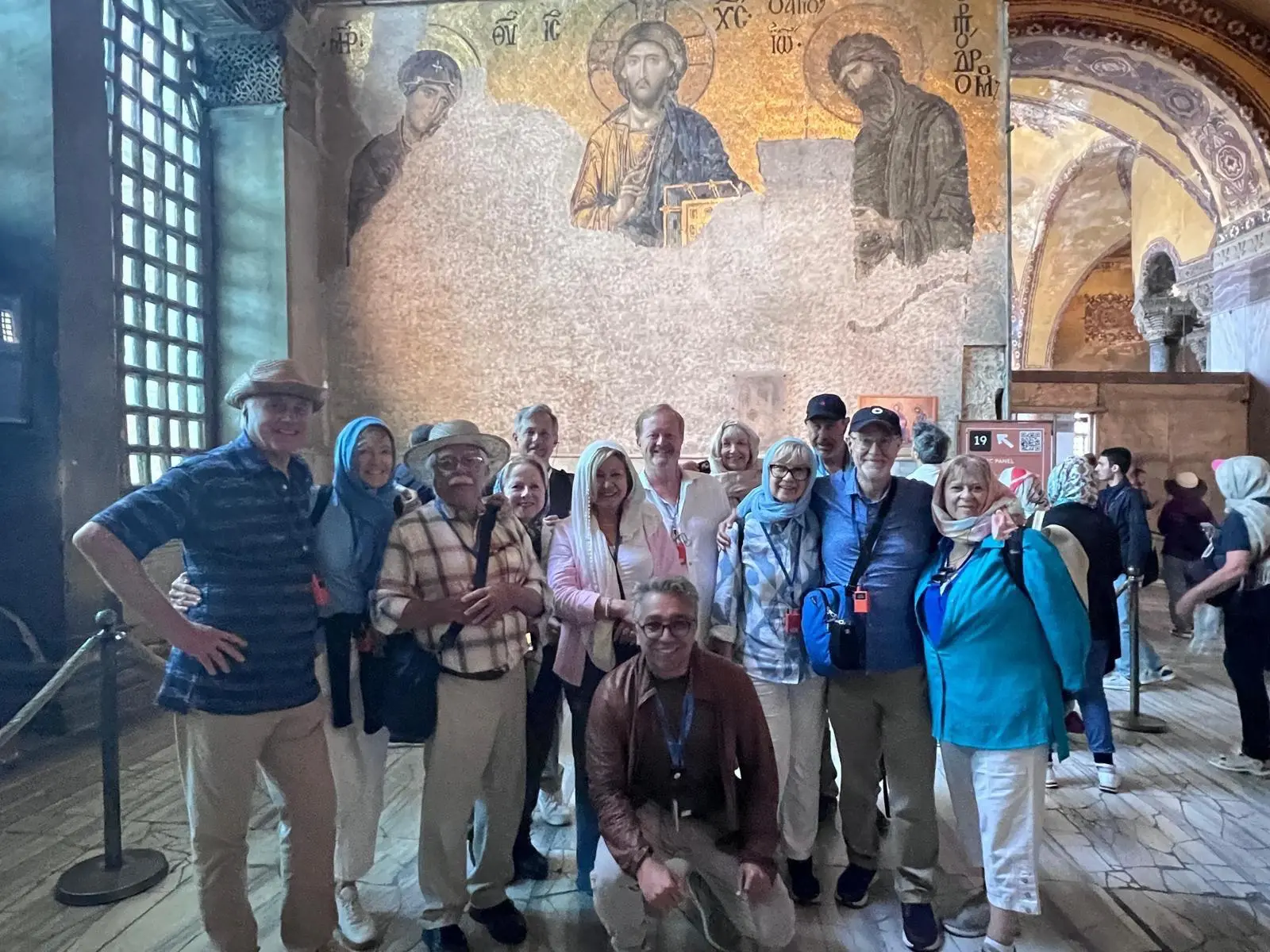
Palaces, gates and surviving fragments
Tekfur Palace, historic gates and fragments embedded in modern neighborhoods show that Byzantine Istanbul is not confined to one museum. Much of the story survives in layers, sometimes beside everyday streets and homes.
Underground Constantinople
The city depended on an extensive water system. Famous and lesser-known cisterns reveal Roman engineering, reused stonework and the practical needs of a crowded capital. Access depends on current opening conditions, and some smaller spaces sit beneath operating local businesses.
A responsible route
Not every surviving site can be covered well in one day. A private route should prioritize the places that match your interests—military history, Christian art, architecture or urban archaeology—while allowing for traffic, closures and walking comfort.
Who will enjoy this experience?
- Travelers interested in Roman and Byzantine history
- Visitors returning to Istanbul after seeing the main highlights
- Christian heritage, art-history and architecture enthusiasts
- Guests who prefer connected storytelling over a checklist
See the city behind the skyline.
Explore the surviving defenses, sacred art and hidden layers that make Constantinople’s history visible across modern Istanbul.
Explore the related private tour →