There is a big difference between going shopping in Istanbul and understanding what Istanbul has been trading for centuries. Anyone can walk into the Grand Bazaar and see thousands of carpets, ceramics, jewellery pieces, textiles, leather goods and souvenirs. The more interesting questions are what you are looking at, how it was made and why these traditions matter.
What makes a Turkish carpet genuinely handmade? Why do certain kilim patterns appear again and again? What is special about İznik-inspired ceramics? And can you experience Istanbul's bazaars and craftsmanship without being pressured to buy something?
Istanbul has been shopping for a very long time
Long before modern shopping centres and international brands arrived, Istanbul was one of the world's great commercial crossroads. Its position between Europe and Asia brought merchants, travellers, materials and artistic ideas from enormous distances.
Silk, spices, carpets, precious metals, ceramics, leather, textiles and jewellery all moved through the city. Under the Ottoman Empire, Istanbul developed an extraordinary culture of bazaars, workshops, hans and specialised trades. With a knowledgeable local guide beside you, the bazaar stops looking like thousands of unrelated shops and starts becoming a story.
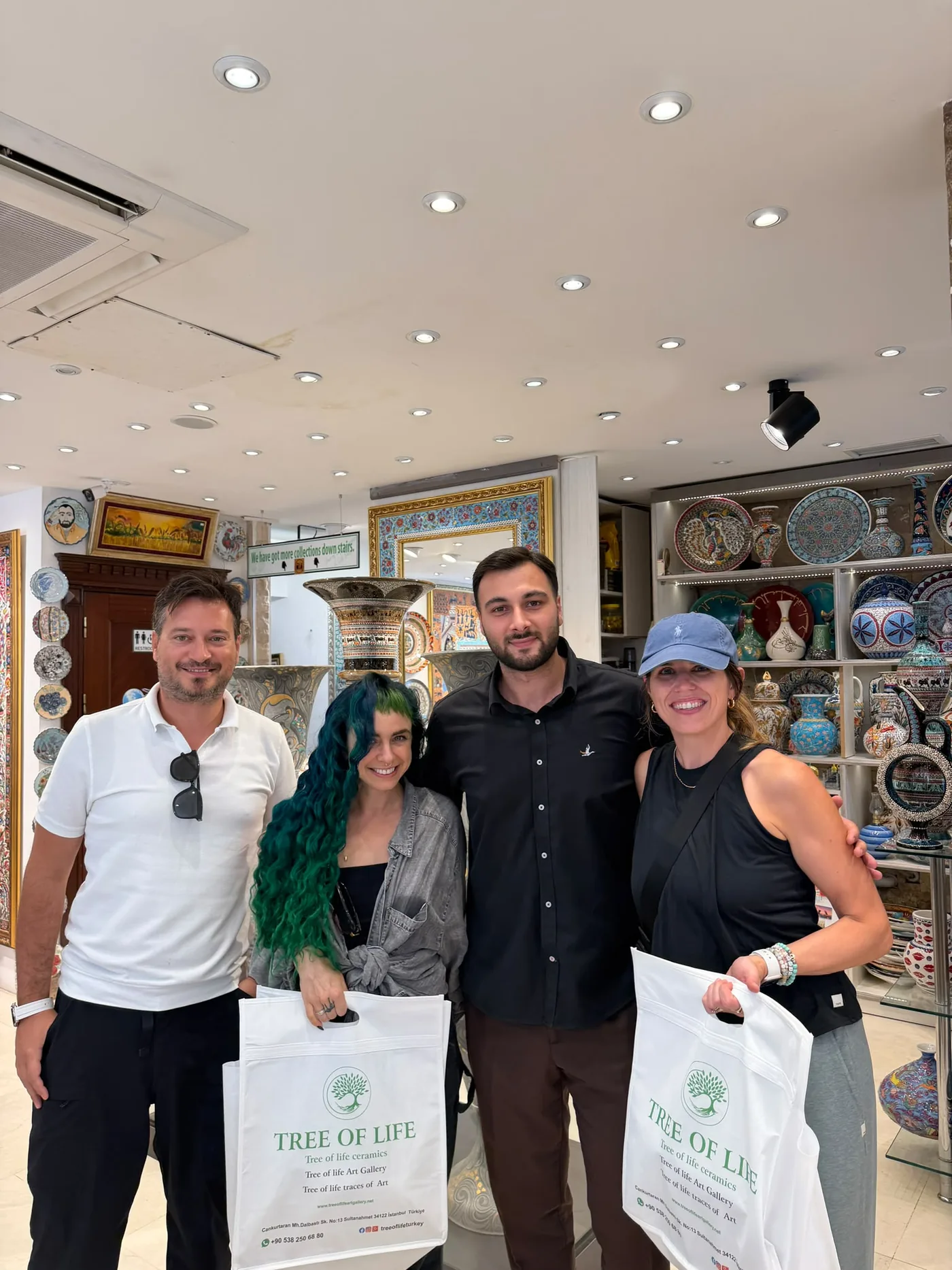
Start with your interests—not a compulsory shop list
A good private experience begins with a simple question: what interests you?
- Handmade carpets and kilims
- Turkish and İznik-style ceramics
- Jewellery and precious metals
- Textiles, embroidery and leather craftsmanship
- Spices, tea, coffee and Turkish delight
- Antiques, decorative arts and meaningful gifts
You do not need to visit every category. If jewellery does not interest you, skip it. If you could spend two hours learning about carpets, slow down. Your interests should determine the route—not a predetermined sales schedule.
The Grand Bazaar is more interesting with context
The Grand Bazaar is one of the places almost every visitor wants to see, but arriving alone can feel overwhelming. A guide can explain how the Ottoman bazaar system worked, why trades traditionally gathered in particular areas, what the historic hans were used for and how bargaining culture developed. You can explore, ask questions, stop for tea and enjoy the atmosphere without feeling that you must purchase anything.
Turkish carpets: more than decoration
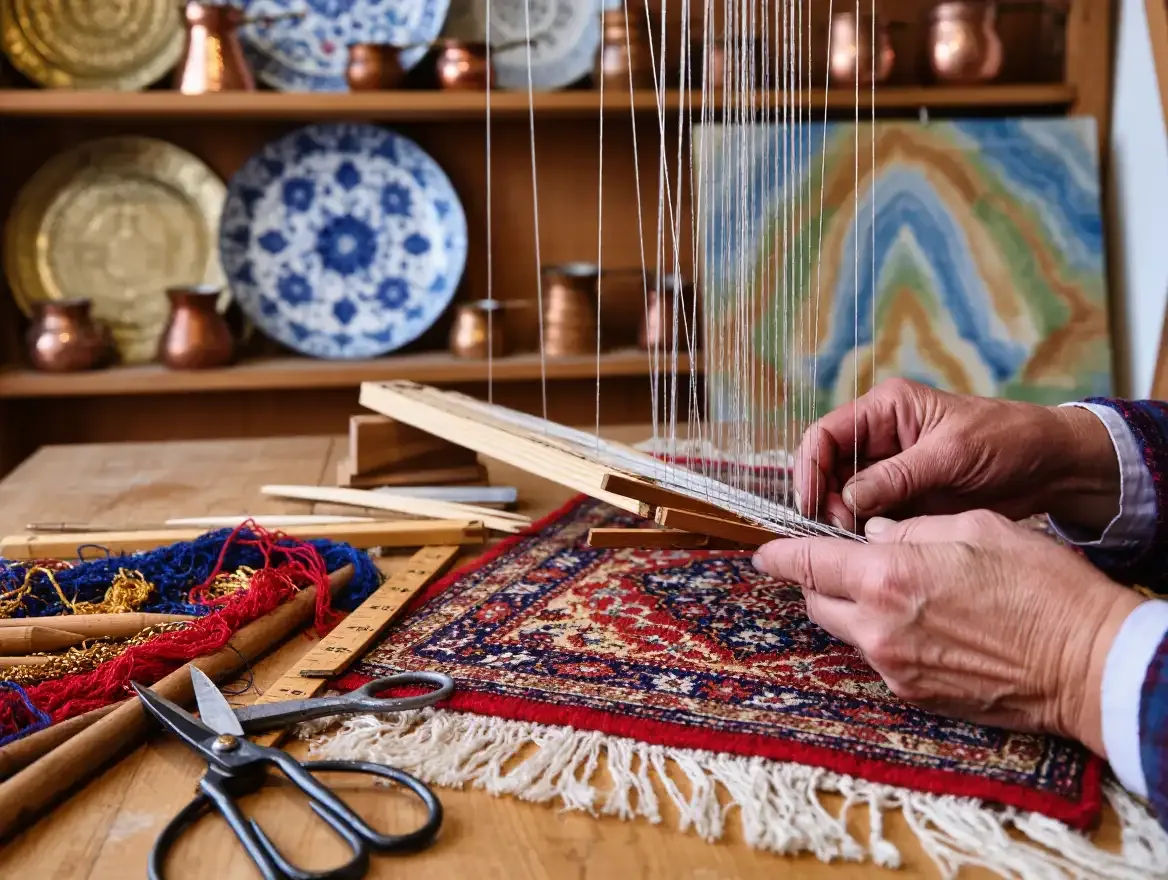
A genuine handmade Turkish carpet or kilim represents far more than something for a floor. Materials, knots, colours, regions and patterns all matter. Behind many designs are traditions passed between generations.
During a suitable craft presentation, guests may compare wool and silk, learn about weaving and knotting techniques and hear the cultural stories behind particular motifs.
Ceramics: an artistic language across Istanbul
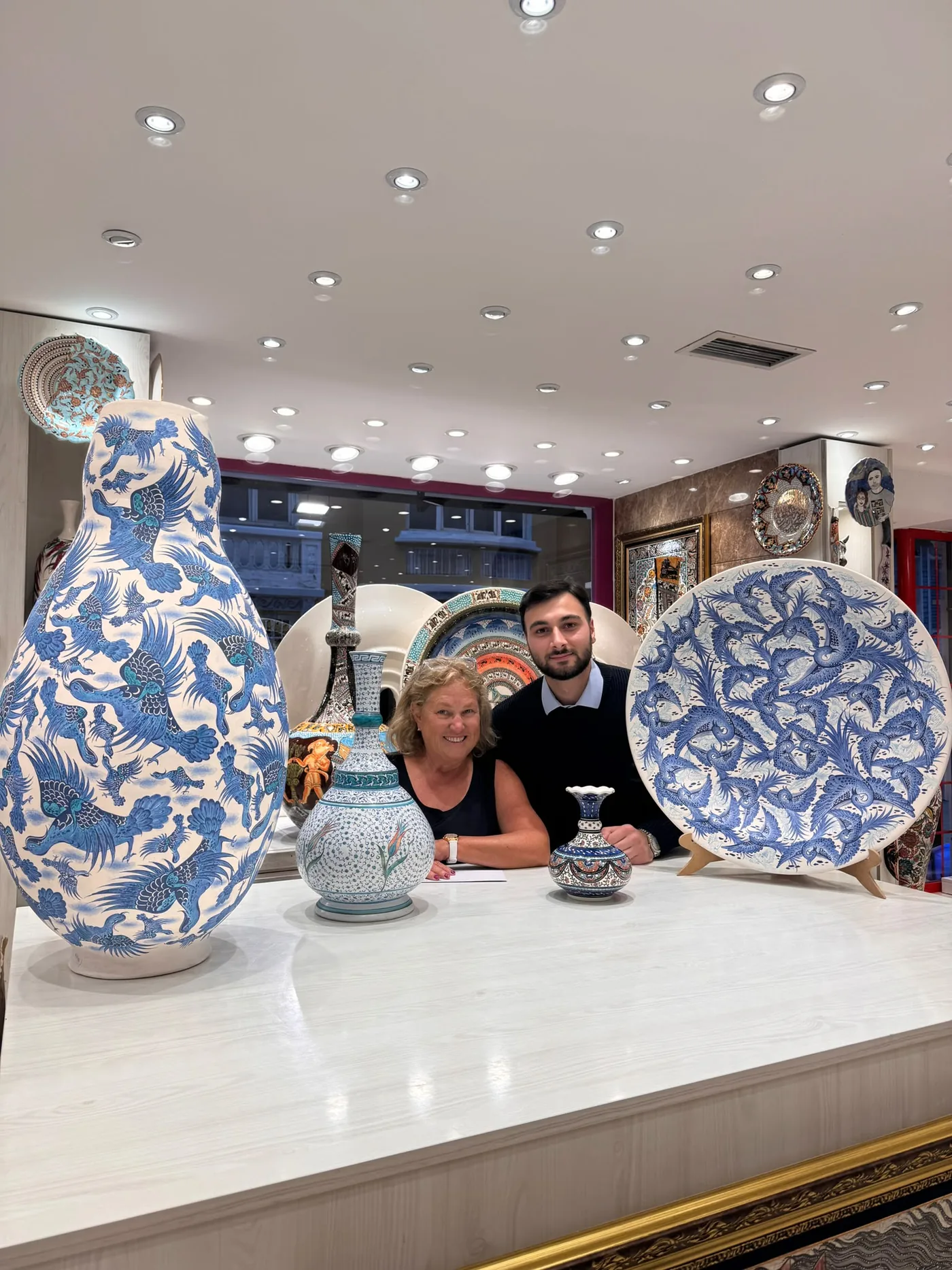
If you have visited Istanbul's Ottoman mosques and palaces, you have already encountered the city's ceramic traditions. Blues, turquoise tones, floral motifs and geometric designs appear throughout monumental architecture.
Learning about Turkish and İznik-inspired ceramics changes how you see both monuments and workshop objects. A handmade bowl or tile becomes connected to an artistic language visible throughout the city.
Textiles, jewellery and traditional workmanship
Istanbul's craft story is not limited to carpets and ceramics. Depending on your interests, the day may include textiles, hand embroidery, leatherwork, jewellery, metalwork, antiques or other decorative arts. A private format lets you concentrate on what matters to your party and ask practical questions before making any personal purchasing decision.
And then there is the delicious shopping
Some of the best things to take home from Türkiye fit easily inside a suitcase: spices, tea, nuts, Turkish delight, coffee and traditional sweets. Your guide can explain what locals buy and how different ingredients are used. There is also one subject that deserves serious investigation: baklava.
No pressure—seriously
Many travellers hear “shopping tour” and imagine being driven between stores where everyone expects a purchase. That is not the experience we want to create. There is no obligation to buy. You should feel comfortable saying, “That is beautiful, but I am interested in learning about it,” and continuing the conversation.
If you find something you genuinely love, wonderful. If you return to your hotel having bought nothing but a Turkish coffee, that is also wonderful.
Why a licensed local guide changes the day
A licensed local guide connects what you see with the wider story of Istanbul: Ottoman trade, bazaar traditions, Turkish hospitality, craftsmanship, art, food culture and modern daily life. You can ask the natural questions: Is this handmade? What does this motif mean? How long did it take? Is bargaining expected?
What could your day look like?
A flexible example is: hotel meeting or pickup, Grand Bazaar introduction, carpet or kilim demonstration, Turkish ceramics, coffee or lunch break, selected textiles or jewellery, spices and Turkish delights, then return to your hotel or another agreed central location.
The important words are according to your interests. This is not a checklist.
Who is this experience for?
It works especially well for couples, families, small private groups, design enthusiasts, art lovers and visitors looking for meaningful Turkish gifts. It is also a relaxed alternative for travellers who have already explored the major monuments.
Don't just shop Istanbul. Understand what you are seeing.
Meet the culture, learn the traditions, see the craftsmanship and hear the stories. If something speaks to you, take it home. If not, take home the story instead.
View the private experience →